
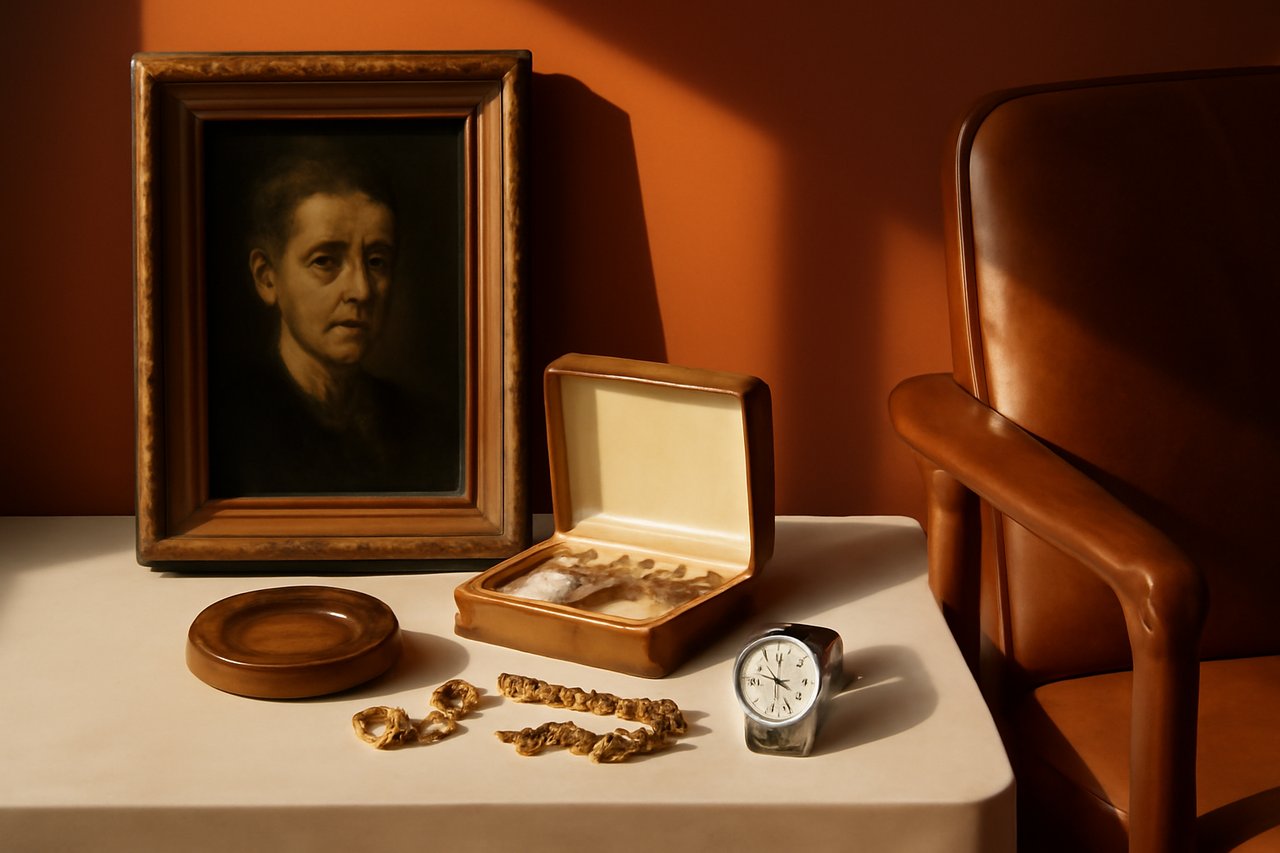
A Box of Jewelry Is Not a Simple Thing
Most estate jewelry collections are mixed. There's real gold next to gold-filled next to gold-plated, genuine stones next to glass, and signed pieces next to unsigned ones. The differences in value between these categories are enormous, and they're not obvious to the eye.
Before you price anything, sell anything, or accept any offer, it helps to understand what you're actually looking at.
Start With the Marks
Hallmarks and stamps are your first clue. In the United States, gold jewelry is typically stamped with a karat mark: 10K, 14K, 18K, or 24K. Silver pieces may show 925 (sterling), 800, or coin silver markings. These stamps are usually inside a ring band, on a clasp, or on the back of a pendant.
Gold-filled pieces are marked GF or 1/20. Gold-plated pieces may say GP or HGE. These have minimal melt value and sell for far less than solid gold.
If there's no mark, that doesn't automatically mean it's not real, but it does mean you need more testing before assuming anything.
Signed Pieces Are a Different Category
A brooch signed Miriam Haskell or Trifari is worth more than an identical unsigned piece, often by a factor of five or ten. Designer and vintage costume jewelry has a real collector market. Look for signatures on clasps, along edges, or stamped into the metal.
Some names worth researching if you find them: Schiaparelli, Chanel, Eisenberg, Bakelite (a material, not a maker, but highly collectible), and mid-century Scandinavian silversmiths like Georg Jensen.
Diamonds and Colored Stones
A stone's value depends on four things: cut, clarity, color, and carat weight. You cannot assess these reliably without a loupe or professional grading. What looks like a diamond could be moissanite, white sapphire, or cubic zirconia. What looks like a modest stone could be an old mine cut diamond worth more than you expect.
For any piece with stones you think might be significant, get a professional assessment before setting a price. A jeweler will test for free or for a small fee, and the information is worth having.
The Melt Value Floor
For unmarked or unsigned gold pieces, the scrap or melt value sets a price floor. Gold prices fluctuate daily. You can calculate melt value by weighing the piece in grams, applying the karat purity, and multiplying by the current gold price per gram. Dealers who buy gold for melt typically pay 70 to 85 percent of that calculated value.
This is the minimum you should accept for real gold. If someone offers you much less, walk away.
Photo-Based Identification as a Starting Point
For a large inherited collection, identifying everything manually takes real time. Taking photos of each piece and running them through a tool like Tappraise can help you sort quickly: this one is worth researching further, this one is likely costume, this one might be worth a professional appraisal. It's not a replacement for a gemologist when the stakes are high, but it's a useful first pass that keeps you from accidentally selling a Cartier brooch at a garage sale price.
What to Actually Do With the Collection
- Fine gold and stones: sell to a reputable estate jeweler, auction house, or documented buyer
- Signed vintage costume: sell on specialist platforms or through a consignment dealer
- Unsigned costume in good condition: list individually or in lots
- Broken or heavily worn gold: sell for melt value
Know which category each piece falls into before you price it. That knowledge is the difference between a fair outcome and leaving money on the table.