
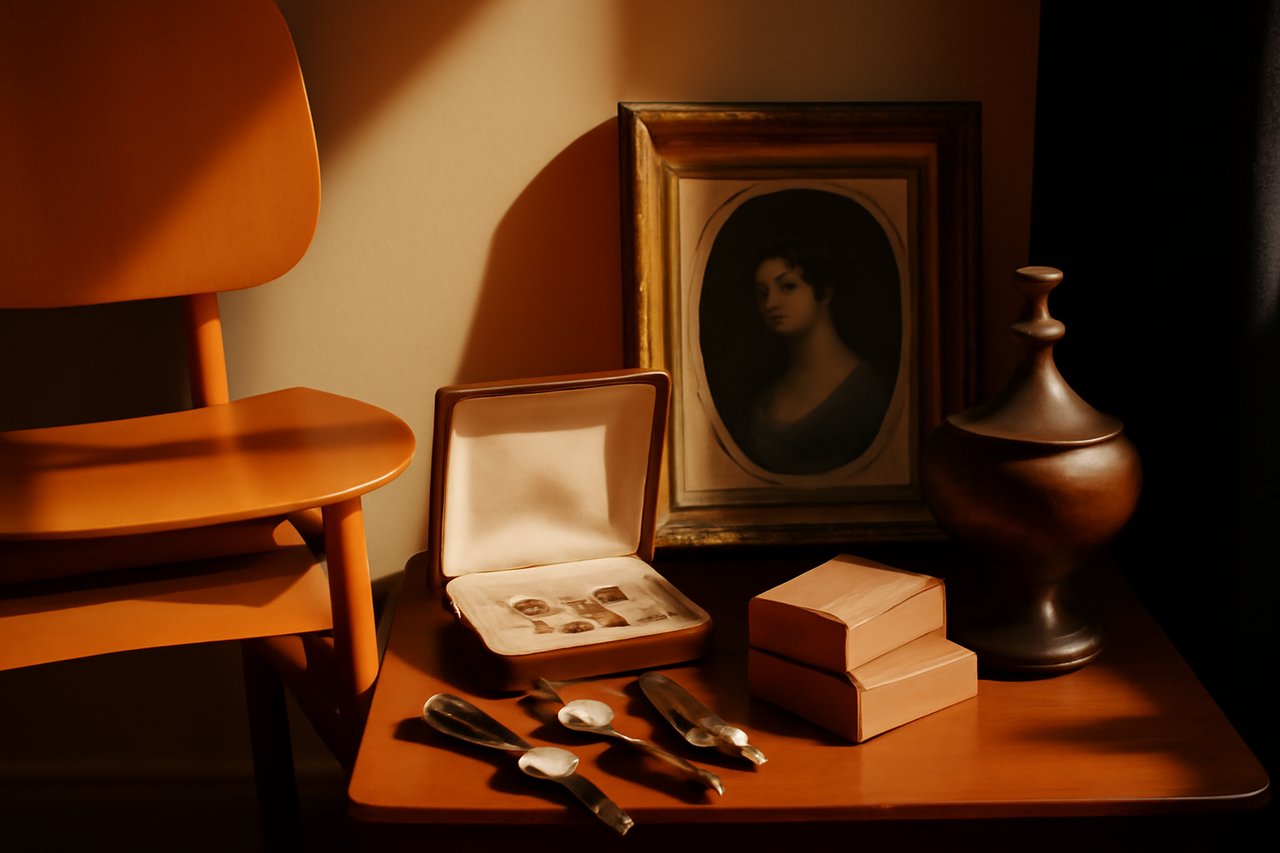
The Urge to Just Start Throwing Things Away Is Real
You walk into the house and the sheer volume of it hits you. Forty years of kitchen gadgets, a garage wall of tools, boxes in the basement you're not sure anyone has opened since 1987. The instinct is to grab trash bags and start moving.
Pause. A few things in that house are almost certainly worth real money, and they don't always look the part.
Do a Single Walk-Through Before Anything Else
Before you sort, donate, or haul, do one slow lap of every room with your phone camera. You're not appraising anything yet. You're just building a visual record. This matters for two reasons: insurance and taxes. If the estate has any value, a timestamped photo record protects you.
Pay attention to anything that looks old, signed, marked, or different from what you'd find at a big-box store today. That includes:
- Paintings or prints with signatures on the front or back
- Furniture with dovetail joints, maker's marks, or unusual wood
- Jewelry in boxes or rolled in cloth
- Watches, especially ones with visible mechanical movements
- Pottery or ceramics with marks stamped into the base
- Vintage cameras, lenses, or audio equipment
You don't need to know what any of it is yet. You just need to not accidentally put it in the donate pile.
Sort Into Four Groups, Not Two
Most people sort into keep and toss. That leaves a lot of money on the table. Sort into four:
- Keep (genuinely wanted by family)
- Research before deciding (old, signed, branded, or unusual)
- Sell without research (everyday items with obvious resale value, like a working laptop or a KitchenAid mixer)
- Donate or discard (anything clearly worn out or without resale value)
The research pile is where the work happens, and it's usually smaller than you'd expect.
Identify Before You Price
The most common mistake people make is pricing things they haven't properly identified. A ceramic figurine might be a $12 piece from a discount store or a $400 piece of mid-century Scandinavian design. They can look nearly identical to an untrained eye.
For the research pile, take clear photos in good light: front, back, any marks or labels. Tools like Tappraise can identify an object from a photo, pull comparable sales, and give you a fair market estimate in a few minutes. It won't replace a formal appraisal for items going to auction or into legal documents, but it will tell you quickly whether something deserves a closer look or not.
Handle Legal and Tax Questions Early
If the estate is going through probate, some assets may need a formal written appraisal for the court. Talk to the estate attorney before you sell anything significant. In the US, inherited assets are generally valued at fair market value on the date of death, which affects capital gains if you later sell. That's not a reason to be paralyzed, but it is a reason to document what you find before it leaves the house.
Give Yourself More Time Than You Think You Need
Estate sales companies often tell families they need to move fast. Sometimes that's true. More often, the pressure to clear a house in a weekend leads to regret. A piece sold at a garage sale for $20 that was worth $400 is money gone, and more importantly, it's an object from someone's life that deserved better.
A measured pace, even just a few extra days on the research pile, almost always pays off.
One Last Thing
Ask older relatives if they know the stories behind anything before the house is cleared. Provenance, the history of who owned something and where it came from, adds real value to antiques and art. Once the people who know are gone, that information is gone too.